All On Four Dental Implants
All on Four treatment offers a full-arch fixed smile using fewer implants, delivering immediate function and long-lasting aesthetic results.



Where Dentistry
Meets Aesthetics
Real patient results at Estetik Smile reflecting personalized, natural, and clinically guided smile transformations!
Procedure
Duration
The procedure is typically completed over several days. On Day 1, the initial procedure takes approximately two hours. A try-in appointment is scheduled on Day 3 to evaluate aesthetics and fit. On Day 4, aesthetic procedures and tooth bonding are performed, followed by a final check-up on Day 5. Bringing a companion is optional.
Duration of procedure
2 hours / 4 days
Anesthesia
Local anesthesia
Accommodation
5 Night
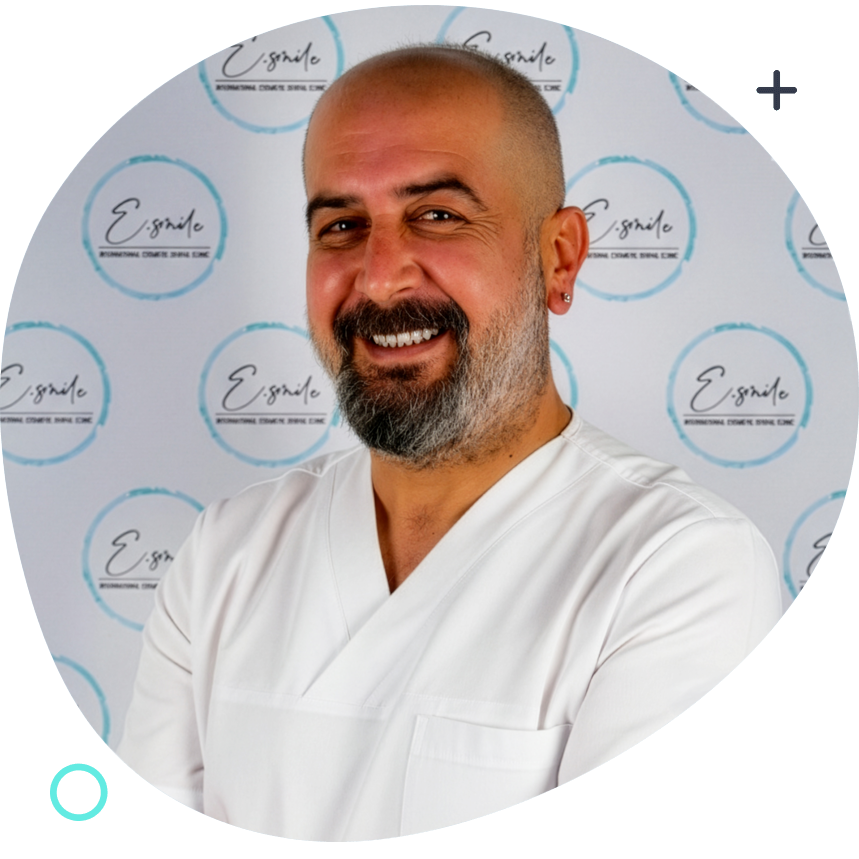
Table Of Contents
hide
Restore Your Smile with All on Four Dental Implants
If you’re looking for a permanent way to restore both your smile and your ability to chew, the all on four dental implants technique is the ideal solution. This method allows dentists to place just four titanium implants at strategic angles into the jawbone and load a fixed prosthesis onto them on the same day, particularly for patients with no teeth or those requiring the extraction of all existing teeth.
Unlike traditional implants, which often require multiple surgeries and sinus lifts, the all on four system offers faster and more satisfying results with fewer procedures. (1)
If you have significant bone loss in the back of your jaw and think you cannot have fixed teeth, all on 4 dental implants provide a perfect fit for your anatomical structure. This method greatly reduces the need for complex, costly advanced surgical procedures such as bone grafting. Even if you don’t have sufficient bone height, you can safely benefit from this treatment with the special angled placement of the implants.
Before starting the treatment process, during the detailed preparation phase, your dentist will analyze your jaw structure with millimetric precision using 3D dental tomography and digital measurements taken from you.
On the day of the procedure, your dentist will place two straight implants in the front of your jaw, where bone density is highest, and two implants at angles of 30 to 45 degrees in the back, creating a solid foundation for the hybrid prosthesis supported by the four implants. Immediately after the operation, you won’t have to spend the healing process without teeth, due to the temporarily fixed teeth loaded onto the implants. (2)
During the osseointegration process, which begins after the surgical intervention and refers to the cellular fusion of the implants with the jawbone, you must adhere to the soft food diet specially prepared for you by your dentist. In addition, avoiding hard foods that put excessive strain on the implants for a period of time is critical to ensuring the long-term success of the treatment.
What are All on Four Dental Implants?
If you are completely edentulous or need to have all your teeth extracted, the advanced surgical technique that secures your entire denture onto just four titanium implants is called all on four dental implants. With this method, instead of getting individual implants, you can have fixed teeth on the same day with four main supports placed by dentists in the strongest areas of your jaw.
The most distinctive feature that sets this technique apart from others is that the implants placed by dentists in the back areas aren’t straight but angled. Experts safely apply the all on 4 dental implants technique to the posterior regions of the jaw where your jawbone has receded without damaging the sinus cavities or nerve channels. This method, which dentists can apply to both the upper and lower jaws, distributes the biting force evenly across four implants based on biomechanical principles. (3)
Are You a Candidate for All on Four Dental Implants?
If you are wondering whether you are a suitable candidate for treatment, you should focus not only on your tooth loss but also on the quality of your jawbone, your overall health history, and your lifestyle. Here are the ideal candidates for all on four dental implants:
- Complete tooth loss: If you have no teeth left in your upper or lower jaw and have been struggling with the difficulties of removable dentures for years, this treatment allows you to transition to the comfort of fixed teeth permanently.
- Unsalvageable teeth: If your existing teeth must be extracted due to advanced decay, looseness, or severe gum infections, you can have all your teeth extracted in a single session and have your implants placed on the same day.
- Bone loss issue: If you have significant bone loss in the back of your jaw and your sinus cavities have sagged, you can choose the all on four dental implants method, which offers an angled placement technique, as the solution best suited to your anatomy to avoid complex surgical procedures such as bone grafting. (4)
- Inability to use removable dentures: If you experience constant nausea when using traditional dentures, if your dentures pop out of your mouth when you talk, or if you have sores in your palate, you can improve your quality of life with this fixed design that leaves the palate open.
- Aesthetic concerns: If you think your lips are sinking inward due to tooth loss and creating an aged appearance on your face, you can rejuvenate your facial contours with all on four dental implants that provide lip support.
How to Prepare for All on Four Dental Implants?
If you want to maximize the likelihood of success of your treatment and eliminate any surprises on the day of the operation, the preparation phase is just as vital as the procedure itself. Here is the step-by-step preparation process you need to follow before your all on four dental implant surgery:
- Detailed health analysis: During your initial consultation, you should share not only your oral health status but also your entire medical history with your dentist. If you have chronic conditions such as diabetes, hypertension, or heart disease, your dentist will analyze their potential impact on the surgery.
- Advanced radiological imaging: The most critical technical stage of the preparation process involves dental tomography scans, which provide a three-dimensional view of your jawbone. The specialist can measure the exact location of your nerve channels and bone density with millimetric precision.
- Maximizing oral hygiene: Maximizing your oral hygiene before the operation is one of the most important steps you can take to reduce the risk of infection. Your dentist will ask you to have any tartar on your existing teeth cleaned and to reduce the bacterial load in your mouth by using antibacterial mouthwashes.
- Prosthesis design and measurement: The dentist takes detailed measurements from you to design the temporary fixed teeth that will be fitted on the day of the operation.
What to Expect During the All on Four Dental Implants?
Knowing the situations and stages you will encounter during all on four dental implants treatment step by step increases your confidence in the treatment and reduces your stress. Here is the meticulous process from the surgical start of the all on four dental implants procedure to the moment you get your permanent teeth:
- Anesthesia
At the very beginning of the operation, the dentist numbs the area with appropriate local anesthesia so that you don’t feel any pain or discomfort.
- Tooth extraction and bone preparation
If you have teeth that need to be extracted, are loose, or are infected, the specialist will remove them in a single session using non-traumatic methods. If there are irregular bone protrusions in the extraction gaps or toothless areas, the specialist will prepare a smooth surface by smoothing and recontouring the alveolar ridge to ensure that your prosthesis fits perfectly on your gums and doesn’t cause discomfort.
- Implant placement
This is the most critical and technical stage of the treatment. The dentist places two implants at a 90-degree angle in the front region of your jaw, where bone density is highest, as previously planned based on the tomography scans. To avoid anatomical risks in the rear areas where the sinus cavities are located or nerve channels pass, the dentist places two more implants at angles of 30 to 45 degrees. Thanks to this angled placement technique, a solid biomechanical structure is established that forms the basis of the all on four dental implants system and distributes the load across the entire jaw. (5)
- Abutment
Immediately after the implants are placed in the bone, the dentist attaches special connecting pieces that are screwed into the implants through the gum. These pieces raise the implants to gum level and allow the prostheses to be screwed onto the implants shortly thereafter.
- Taking measurements and preparing temporary teeth
As soon as the surgical procedure is complete, the specialist records the position of the implants in your mouth using digital or traditional measurement methods that replicate the exact positions. These measurements are quickly sent to the laboratory, and technicians prepare your temporary fixed teeth, designed to fit your facial contours, in just a few hours.
- Placement of fixed teeth
After the operation, your dentist screws your temporary hybrid prosthesis, which arrives from the laboratory, onto the implants in your mouth. This moment is the most exciting part of the all on four implant treatment. This early loading protocol resolves your aesthetic concerns that very day and helps reduce further bone resorption. (6)
- Final stage
When the three-month healing period is complete and your implants have fully integrated with the bone, your dentist will remove your temporary teeth and take final detailed measurements. At this stage, you will reassess your aesthetic expectations, tooth color, and shape. Your permanent all on four dental implants, made from much more durable and aesthetic materials in the laboratory, will be fitted.
What Happens During the Recovery Process After All on Four Dental Implants?
Knowing what to expect after the operation, how you will feel, and how to get through this process as comfortably as possible is the most important key to your recovery journey. Here is the day-by-day, week-by-week physical and psychological change process you will experience during the recovery process after all on four dental implants:
- In the first few hours after the operation, it is quite natural to have slight bleeding in your mouth. You can stop this bleeding by firmly biting down on the sterile gauze pads your dentist placed for about 45 minutes. Avoid spitting or rinsing your mouth throughout the day to prevent disrupting the clotting process.
- For the first 3 days, you may see swelling or bruising on your face, cheeks, and sometimes under your eyes due to surgical trauma. This is an entirely natural healing response of your body. If you take the prescribed painkillers and antibiotics on time, you will get through this process quite easily.
- During the first week, you must eat soft foods such as soup, yogurt, and purees that don’t require chewing force, as your implants are still fusing to the bone. You should avoid hot and very cold foods to protect the surgical area’s sensitivity.
- Starting the day after the operation, you can eliminate the risk of infection by gently rinsing your mouth with antiseptic mouthwashes recommended by your dentist or with warm salt water.
- During the first few days, while your tongue is getting used to the prosthesis, you may have difficulty pronouncing certain letters or your saliva production may increase. By doing reading aloud exercises and talking a lot, you will adapt your tongue muscles to your new teeth in a very short time.
Life-Changing Results with All on Four Dental Implants
The first and most striking result you will experience upon completing treatment is the immense psychological relief that comes from simultaneously achieving the flawless aesthetic smile you have longed for and regaining lost chewing function. Thanks to the all on four dental implants, you will instantly achieve a powerful chewing performance, as if you were biting with your own natural teeth, leaving behind the insecurity, pain, and loss of taste sensation caused by loose dentures.
All on four implants, which stop the deterioration of your jawbone and perfectly support your lip structure from the inside, significantly reduce the deep lines of aging on your face and the sagging around your mouth.
This permanent solution, which protects your bone structure in the long term, corrects phonetic speech disorders, and biomechanically supports facial anatomy, not only improves your oral health but also elevates your overall standard of living and self-confidence to the highest level.
How Much Do All on Four Dental Implants Cost?
All on four dental implant treatment costs vary depending on many factors. The price of this procedure is shaped by many variables, from your aesthetic expectations to your bone structure, the materials to be used, and the dentist’s experience. One of the most important reasons for price variability is the implant brand and prosthesis material.
In addition, any additional procedures you may need before treatment also play a decisive role in the total cost. For example, procedures such as bone grafting or advanced imaging techniques can increase costs while improving treatment success. You should also keep in mind that factors such as the clinic’s location, the dentist’s experience, and the technological infrastructure used all affect prices.
Friendly Asked Questions (FAQ)
What is a Hollywood Smile?
The Hollywood Smile was previously known as the “celebrity smile.” With the widespread use of zirconium materials, it has become a dental aesthetic that is now accessible to everyone.
Hollywood Smile refers to a tooth color that is perceived as the whitest shade. In fact, on the dental color scale, it corresponds to the shade known as BL1, which represents the brightest and most aesthetic tooth color.
A Hollywood Smile is a comprehensive smile makeover treatment designed to improve the color, shape, size, and alignment of teeth, creating a bright, symmetrical, and attractive smile.
What procedures are included in a Hollywood Smile?
Hollywood Smile treatment may include teeth whitening, Emax veneers, zirconium crowns, gum contouring, and in some cases orthodontic treatment. The plan is fully customized for each patient.
Who is a good candidate for a Hollywood Smile?
Anyone with discolored, chipped, uneven, gapped, or aesthetically imperfect teeth may be a good candidate. Suitability is determined after a dental examination.
Does a Hollywood Smile look natural?
Yes. When designed correctly using high-quality materials, a Hollywood Smile provides very natural-looking results that complement the patient’s facial features.
Is a Hollywood Smile permanent?
The results are long-lasting. With proper care and regular dental visits, a Hollywood Smile can be maintained for many years.
Is Hollywood Smile treatment painful?
No. The procedures are performed under local anesthesia when necessary, ensuring a comfortable and pain-free experience. Mild sensitivity may occur afterward.
How long does Hollywood Smile treatment take?
Treatment duration depends on the procedures involved but is typically completed within 5–10 days.
Does Hollywood Smile damage natural teeth?
No. The treatment is planned with a minimally invasive approach, preserving natural tooth structure and prioritizing dental health.
How should a Hollywood Smile be maintained?
Daily brushing, flossing, avoiding extremely hard foods, and regular dental check-ups are sufficient to maintain results.
Does Hollywood Smile change color over time?
Materials such as Emax veneers and zirconium crowns are stain-resistant. However, poor oral hygiene may lead to surface staining over time.
Table Of Contents
hide
Doctor of Dental Medicine
Mehmet Akbaş
Expertise in digital smile design and advanced prosthetic treatments, Dr. Akbaş utilizes high-end restorative protocols to ensure precision-driven transformations that enhance both dental aesthetics and patient confidence.
Medically reviewed by
Dr. Mehmet AKBAS
Published
February 6, 2026
Last medically reviewed on
September 21, 2026
Healthy Smiles
Everyday!
Get your day started with a smile: check our services to see what we can help you with!
Modern
Dental Solutions
Personalized treatments focused on function, harmony, natural appearance, and long-term oral health stability.
Contact Us
+90 532 013 03 55


© 2026 Estetik Smile | Digital solutions by Digiduction
© 2026 Estetik Smile | Digital solutions by Digiduction